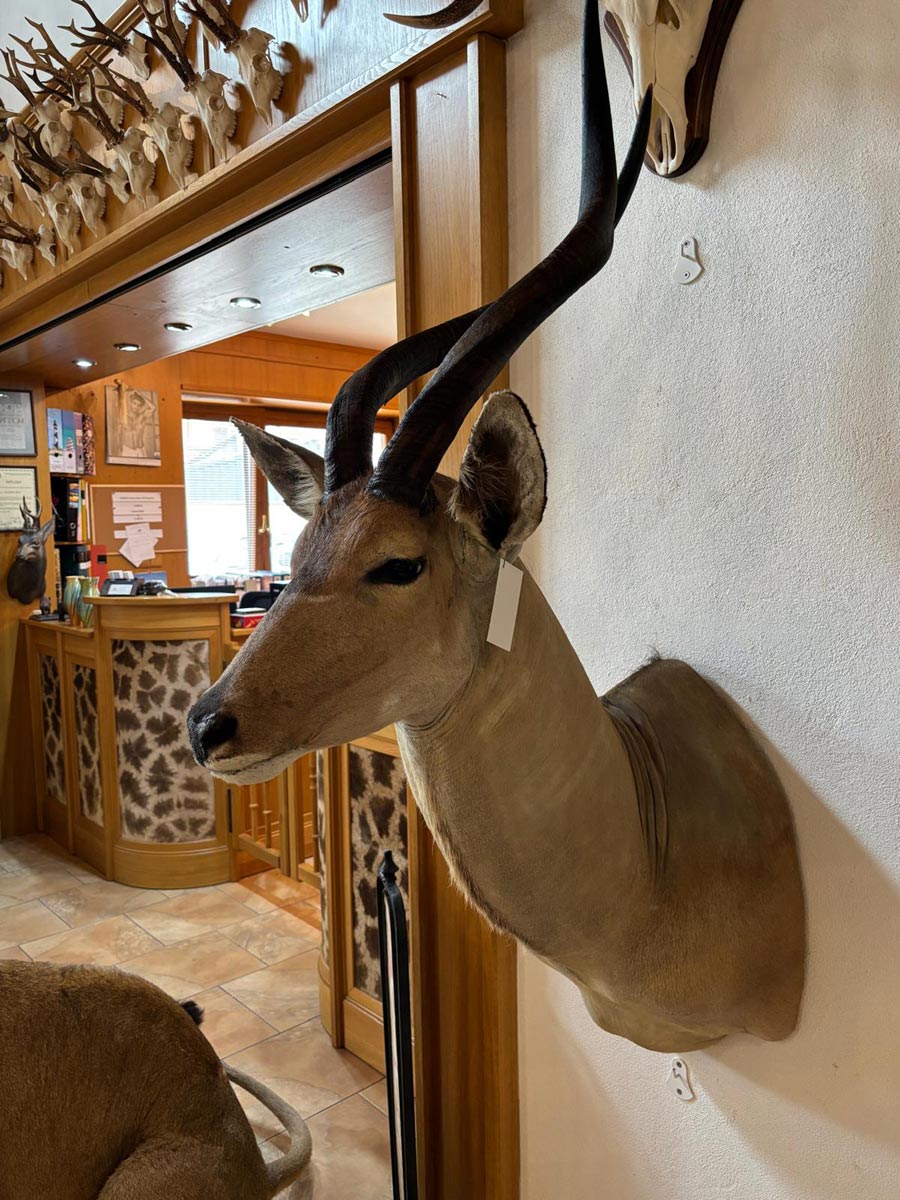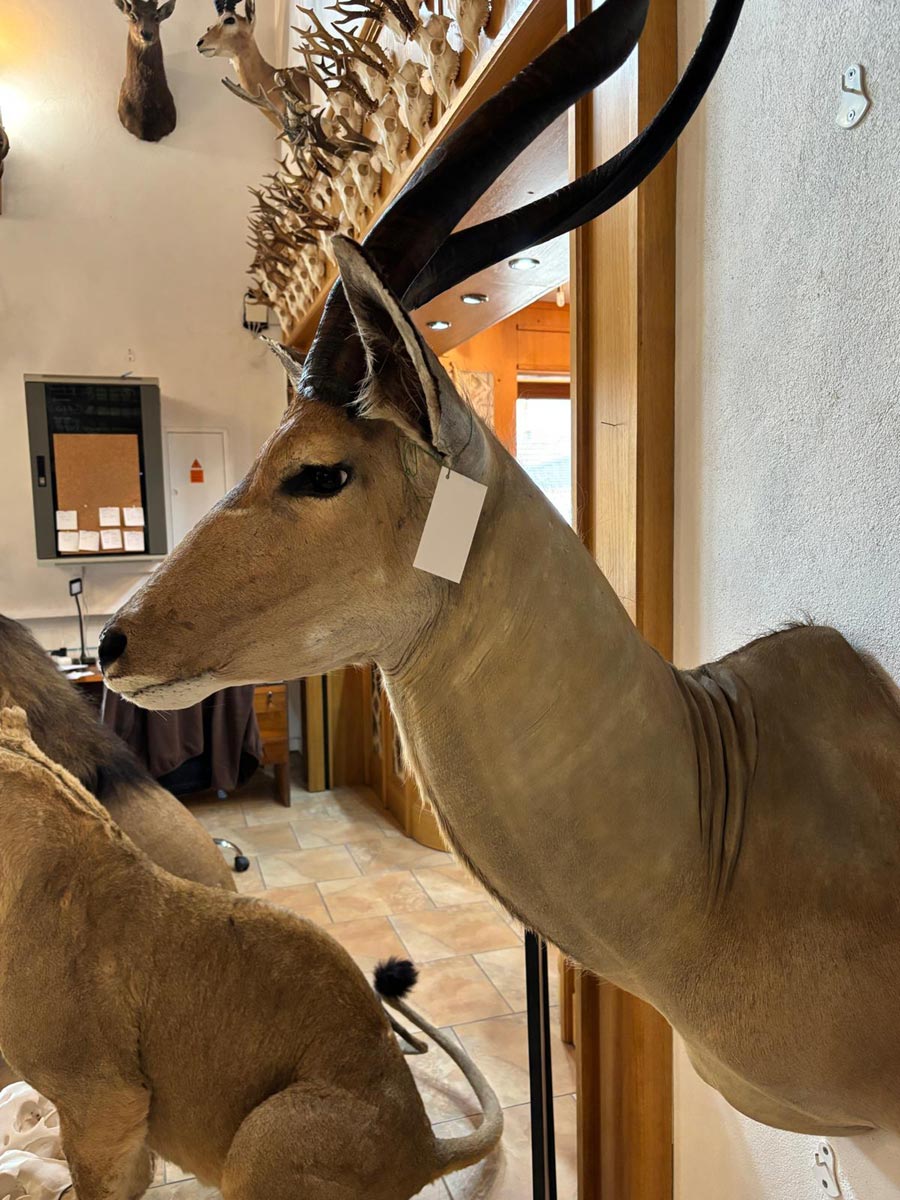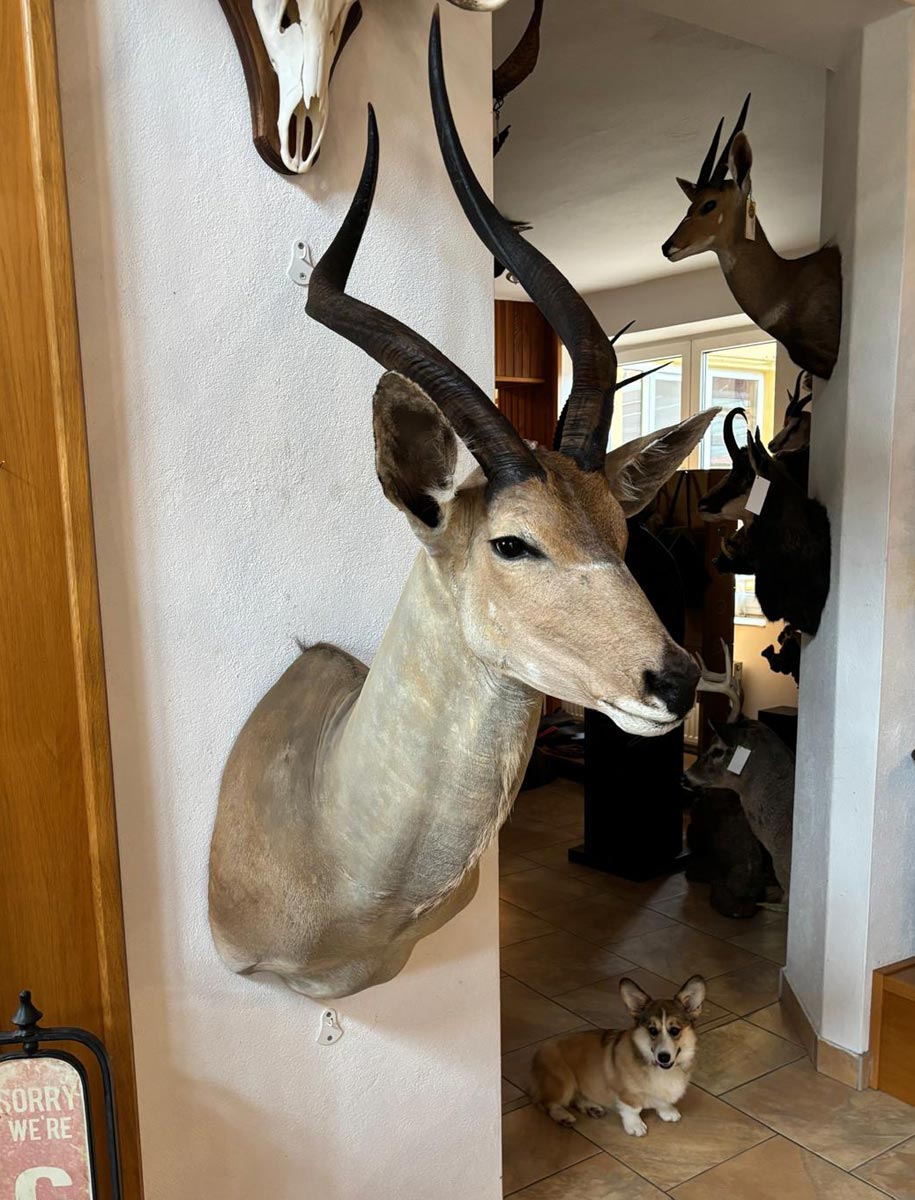

From time to time, an animal arrives at our taxidermy workshop that even an experienced taxidermist rarely gets the opportunity to work with. One such case is the kuland – an exceptionally rare interspecific hybrid between a greater kudu and a common eland.
The kuland is not a separate antelope species. It is a hybrid of two evolutionarily related species belonging to the tragelaphine group of antelopes. The resulting hybrids can be viable, although males are believed to be infertile. This is most likely related, among other factors, to differences in the chromosome structure of the two parent species.
Characteristics of Both Parents in One Animal
Its unusual appearance makes the kuland particularly fascinating from a taxidermist’s point of view. Our specimen clearly displays characteristic features of both parent species.
The powerful build of the neck and body is reminiscent of the common eland, while the long, spiralling horns and some of the proportions of the head resemble those of the greater kudu. The result is an animal that looks strangely familiar at first glance, yet does not quite match the typical appearance of either parent species.
This particular kuland comes from South Africa, and preparing it gave us another rare opportunity to work with a truly unusual specimen.
At Franc & Zugar Taxidermy, we prepare hunting trophies from around the world – from more commonly encountered European and African species to animals that even a professional taxidermist may have the opportunity to work with only a few times in a lifetime.
The kuland undoubtedly belongs among them.