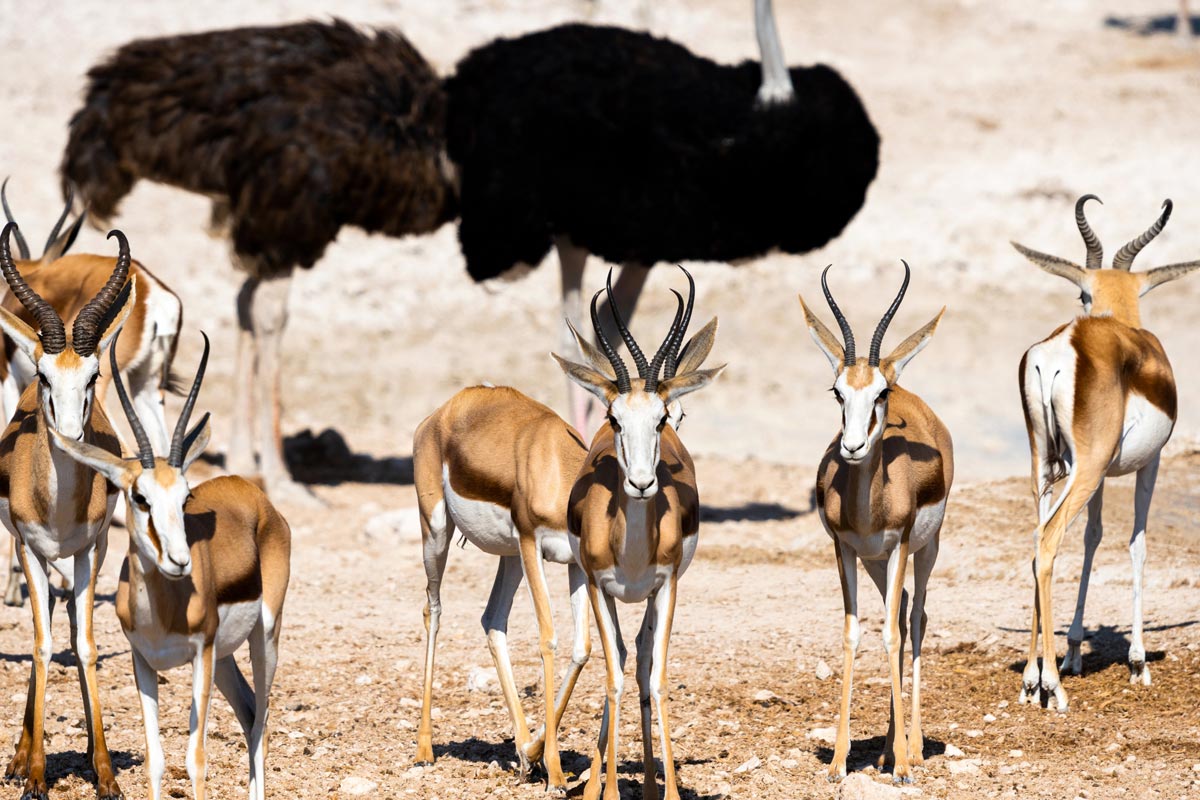
The springbok is one of the most characteristic game species of southern Africa. Elegant, fast and perfectly adapted to life in dry, open environments, it can be encountered on Namibia’s grasslands, savannahs and semi-desert plains.
At first glance, the springbok may appear to be a relatively small antelope. An adult stands approximately 75 centimetres at the shoulder and weighs around 40 kilograms. However, it is certainly not an easy animal to hunt. Springbok usually gather in herds, which means several pairs of eyes are constantly watching the surrounding landscape. In open country, approaching them at close range can be extremely difficult.
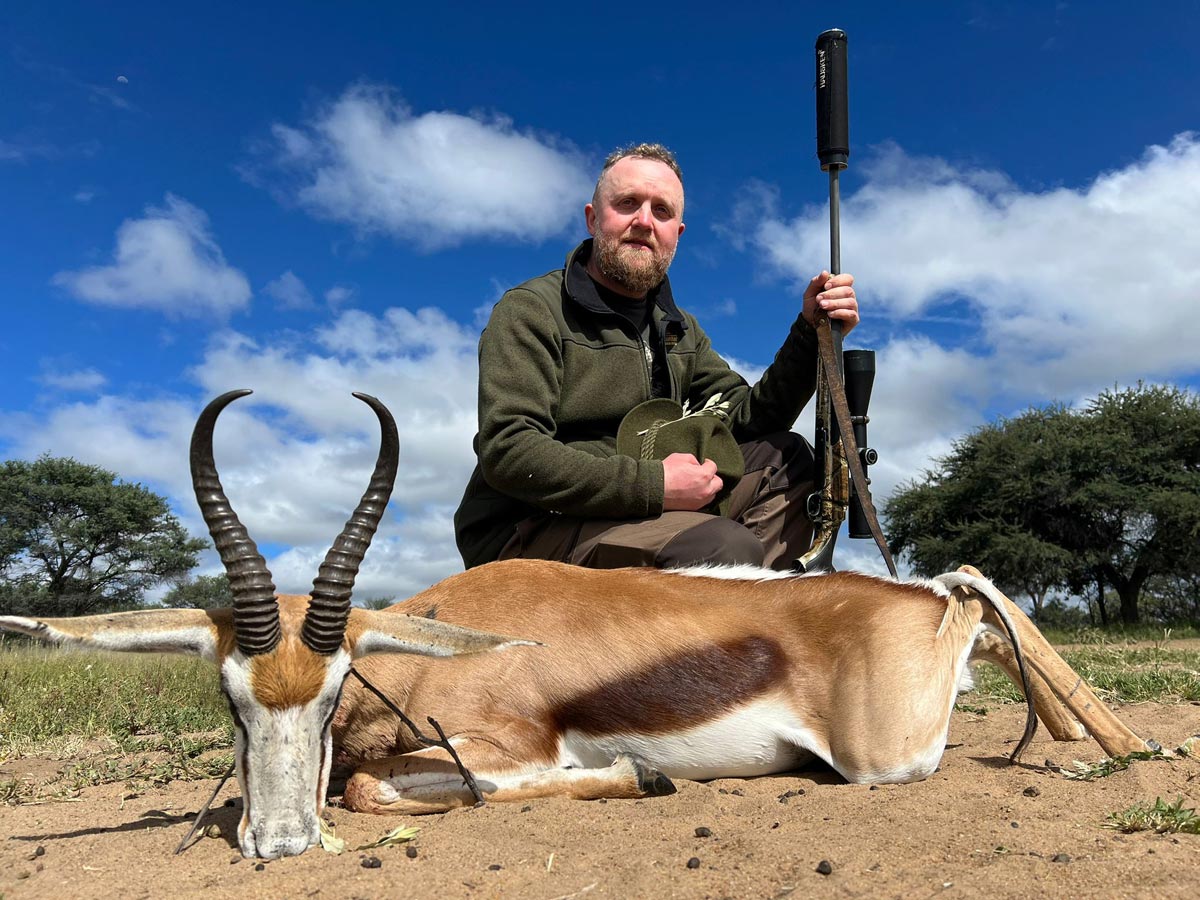
For this reason, springbok hunting in Namibia frequently involves shooting at longer distances. Shots beyond 200 metres are not unusual, and hunters must account for the wind, exposed terrain and the animal’s relatively small vital area. A stable shooting position, accurate range estimation and a confident shot are essential.
The Leaps That Gave the Springbok Its Name
The springbok is famous for a distinctive form of jumping known as pronking. During this display, the animal leaps into the air with all four legs almost simultaneously, arches its back and opens a fold of skin along its rump to reveal a striking crest of white hair.
These leaps may serve as a warning to other members of the herd while also demonstrating the animal’s strength and fitness to a potential predator.
The springbok is so well adapted to arid environments that it can survive for extended periods without direct access to drinking water. It obtains much of the moisture it needs from leaves, roots and succulent plants.
One Species, Several Colour Variants
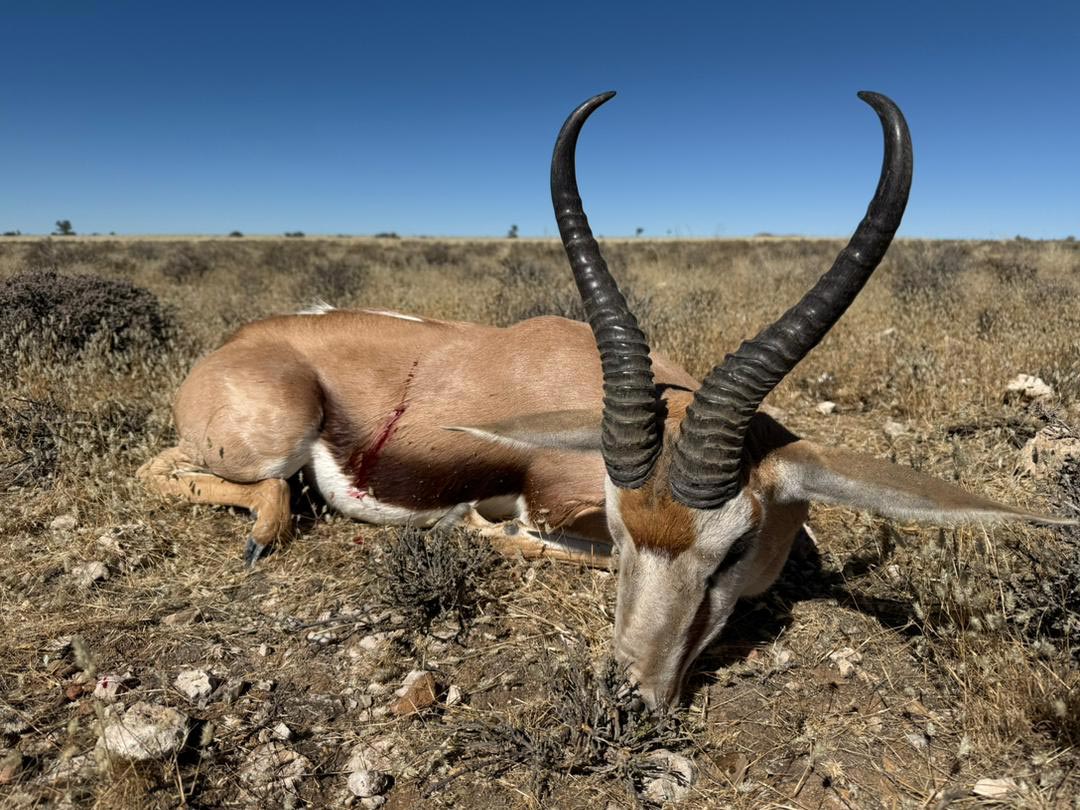
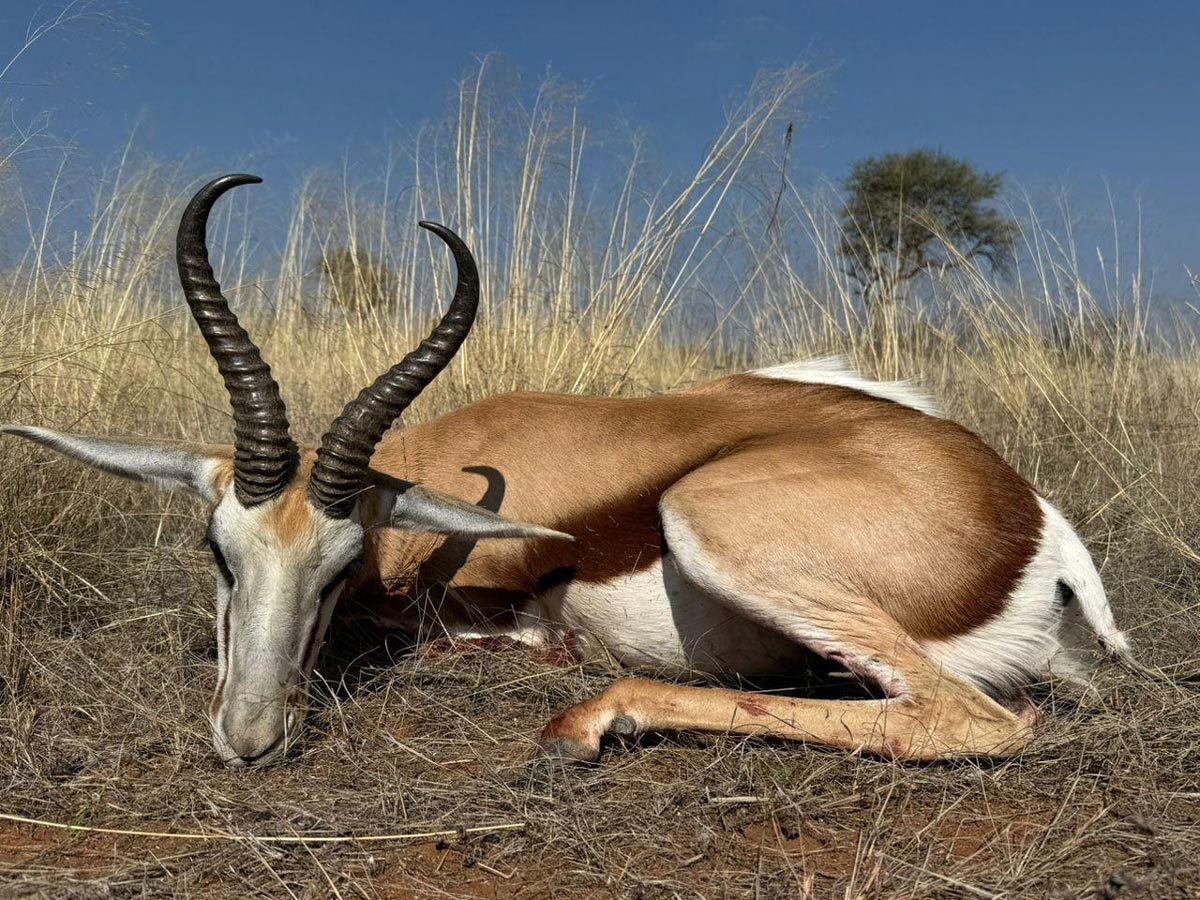
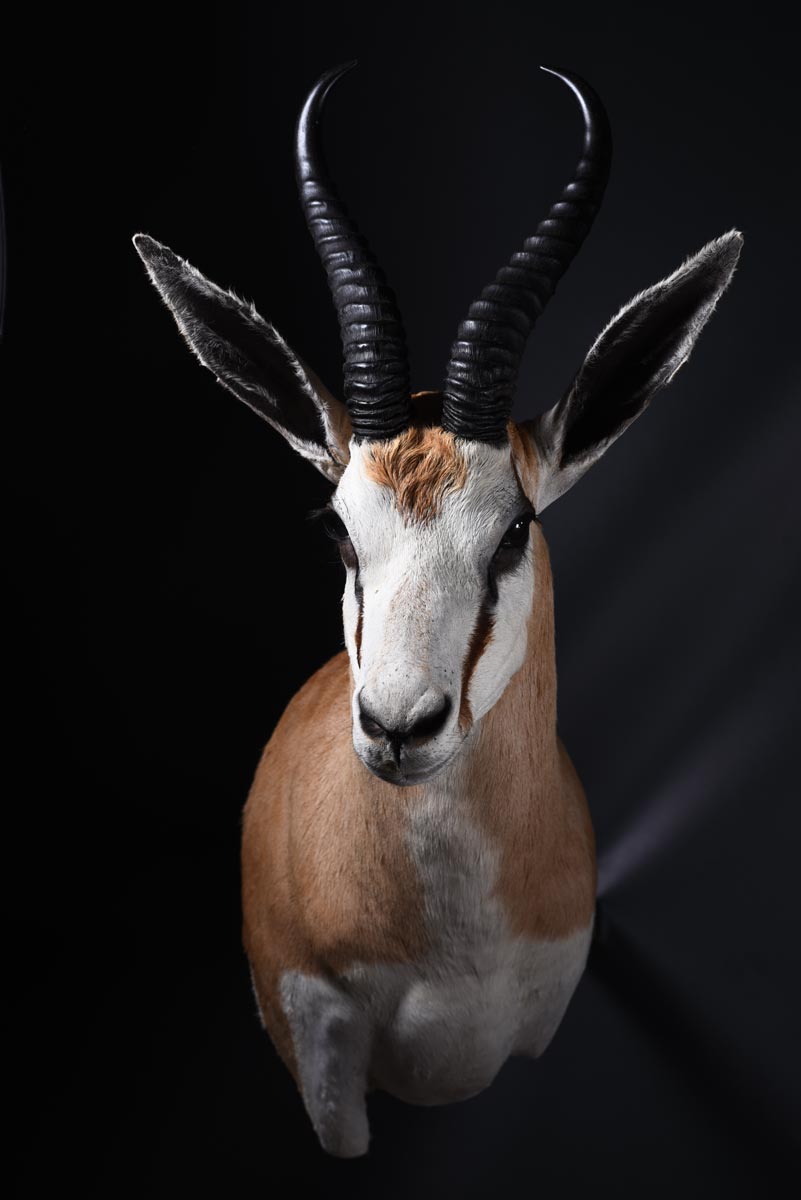
The best-known form has a sandy-brown back, white underparts and a distinctive dark stripe running along each side. However, several other colour variants can also be found:
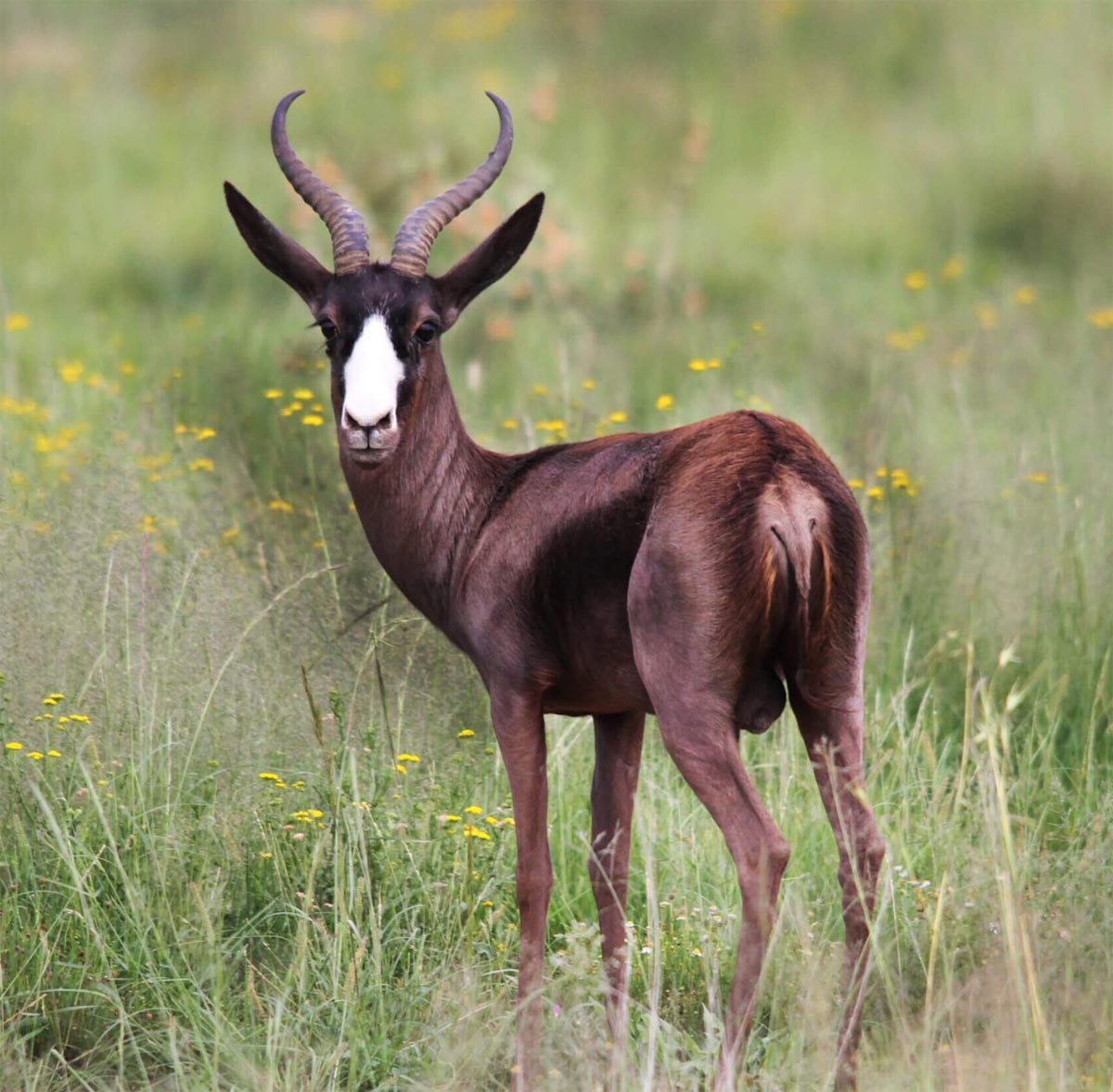
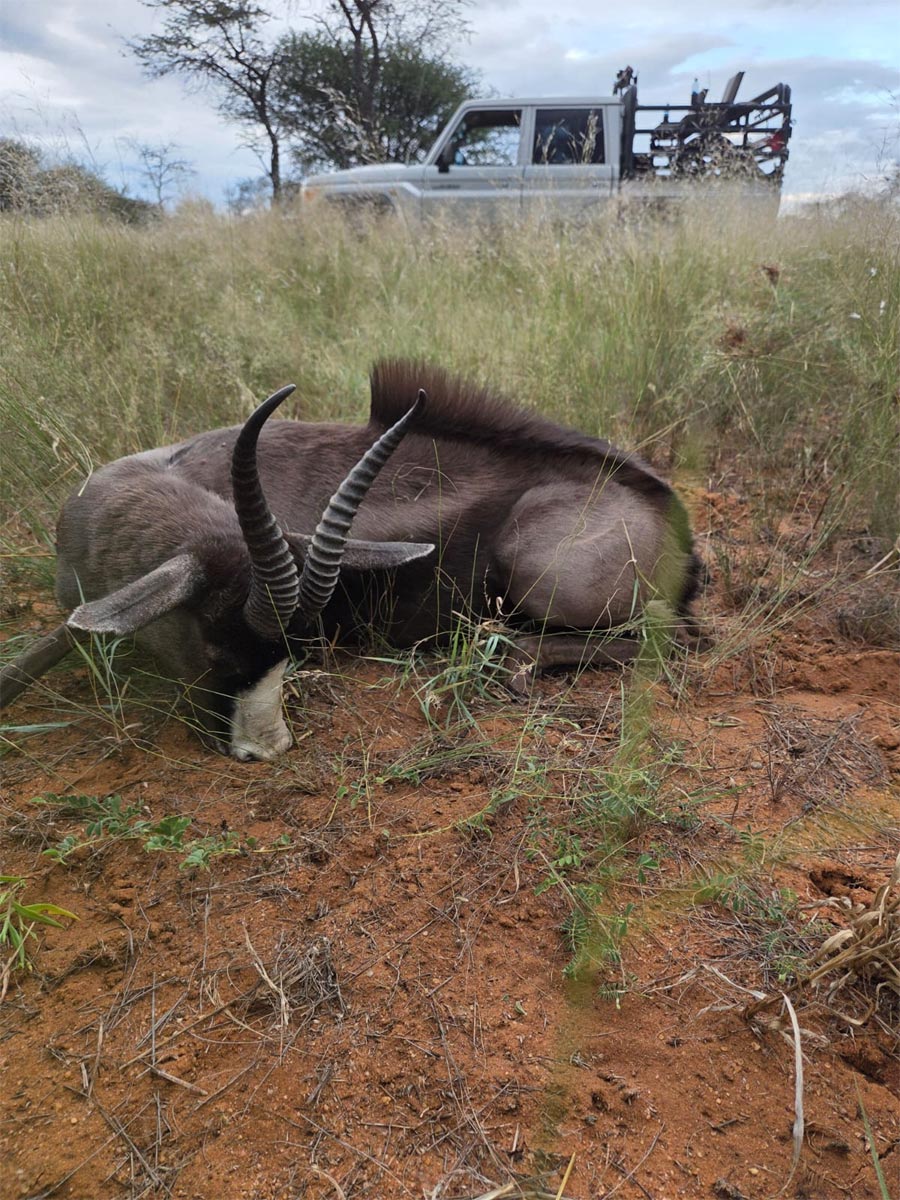
- Black springbok – a strikingly dark, almost completely black variant
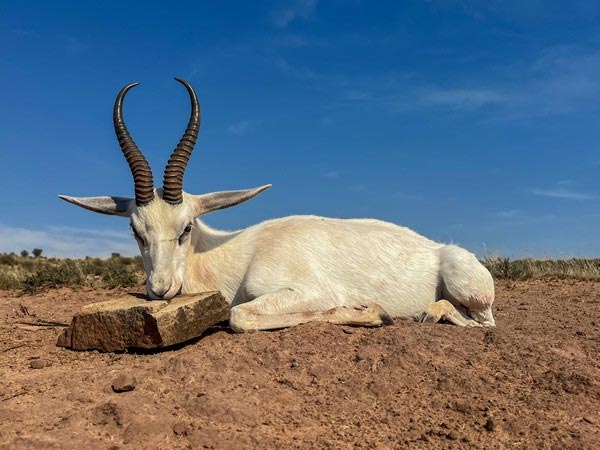
- White springbok – a pale colour variant that is not an albino
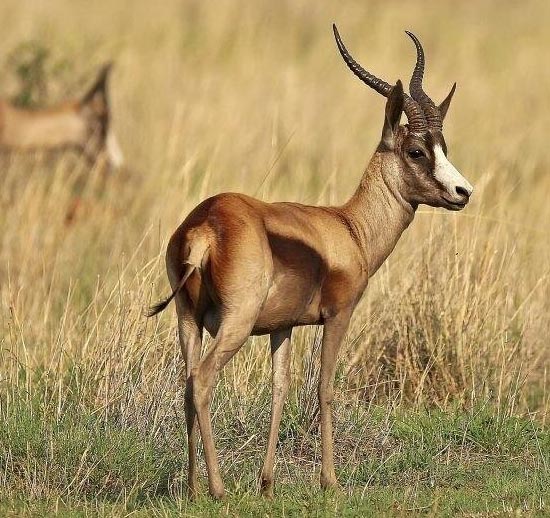
- Copper springbok – a coppery or caramel-coloured variant
These colour forms are not separate species. They are genetic colour variants that have been selectively developed further on South African game ranches. Each produces a distinctly different and highly attractive trophy.
Both males and females have horns, although those of mature males are generally heavier, more deeply ridged and more strongly curved. Together with the springbok’s contrasting coat pattern, they give this antelope its unmistakable appearance.
🌍 The springbok is one of the species you can hunt in Namibia with Franc Hunting Safaris. If you are drawn to hunting in open African landscapes, accurate shooting at longer distances and one of southern Africa’s most iconic antelopes, the springbok certainly deserves a place in your hunting programme.