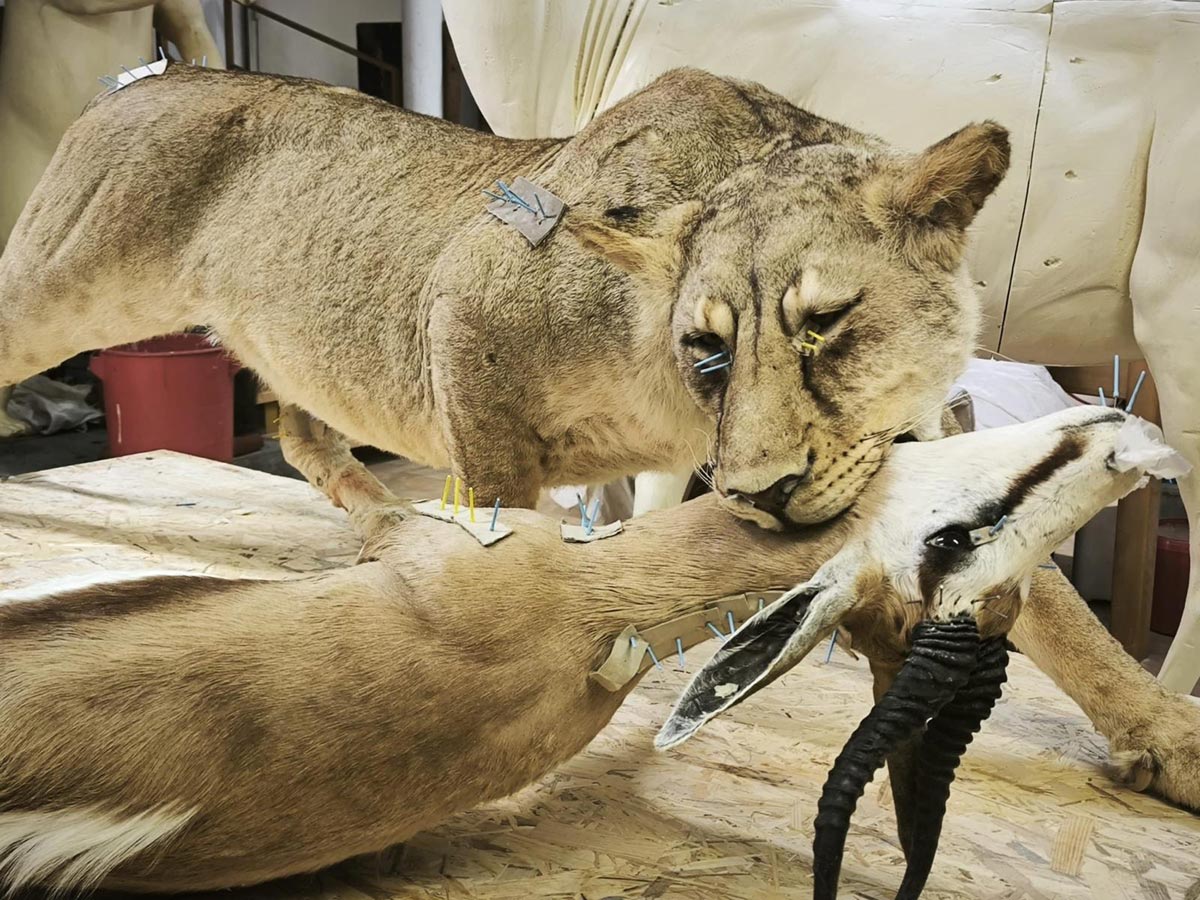
One of our clients was particularly impressed by our original composition of a lioness with her prey and asked us to create a similar scene using his own trophies. At first glance, it might seem that all we need to do is select suitable forms, fit the hides and arrange the two mounts together. In reality, this is where the most demanding part of the work begins.
Every animal has different proportions, and every hide requires an individually adjusted form. The process becomes even more complex when two mounts must form a single composition and capture one specific moment.
The form is only a starting point
A commercially produced taxidermy form rarely fits a particular animal perfectly. We begin by checking its dimensions, body length, circumference, leg position and overall silhouette. Everything must correspond to the individual lioness as well as to the intended composition.
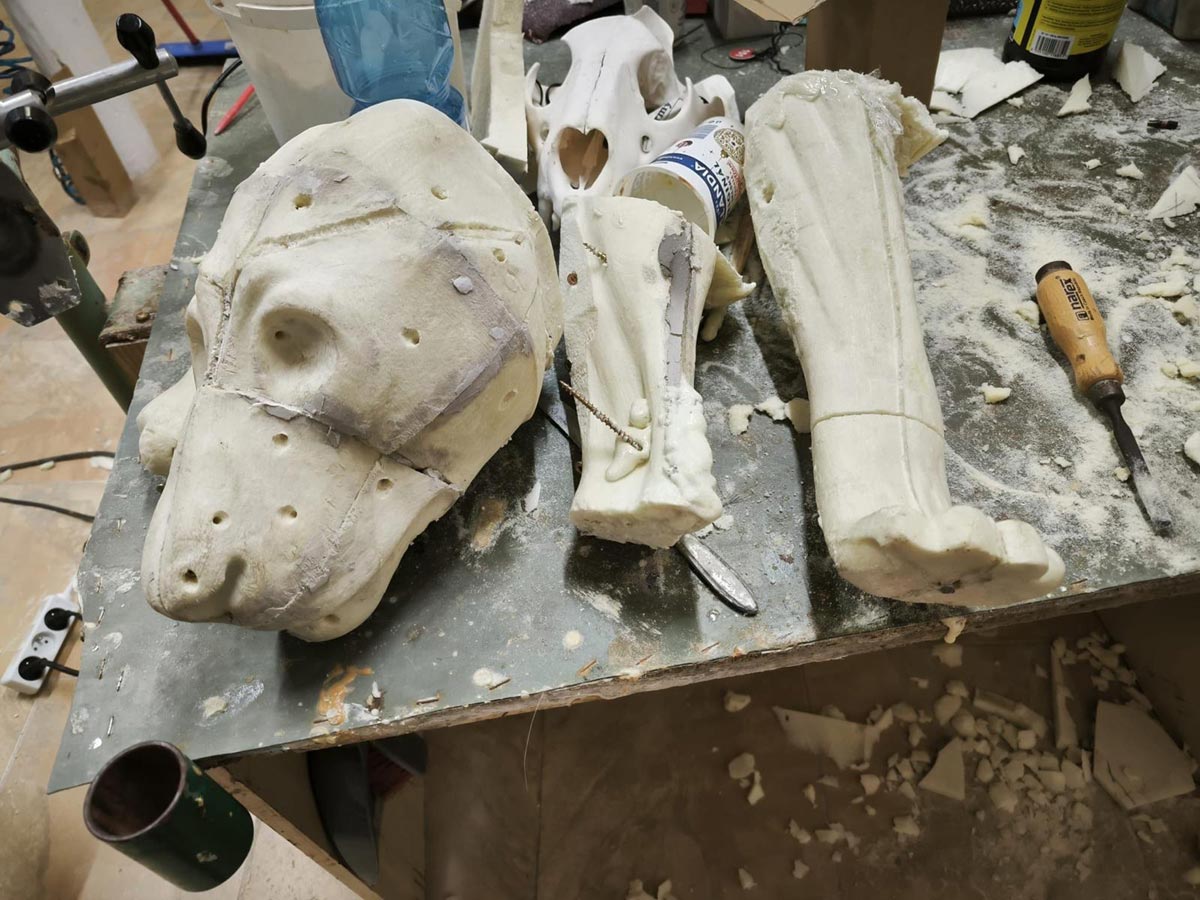
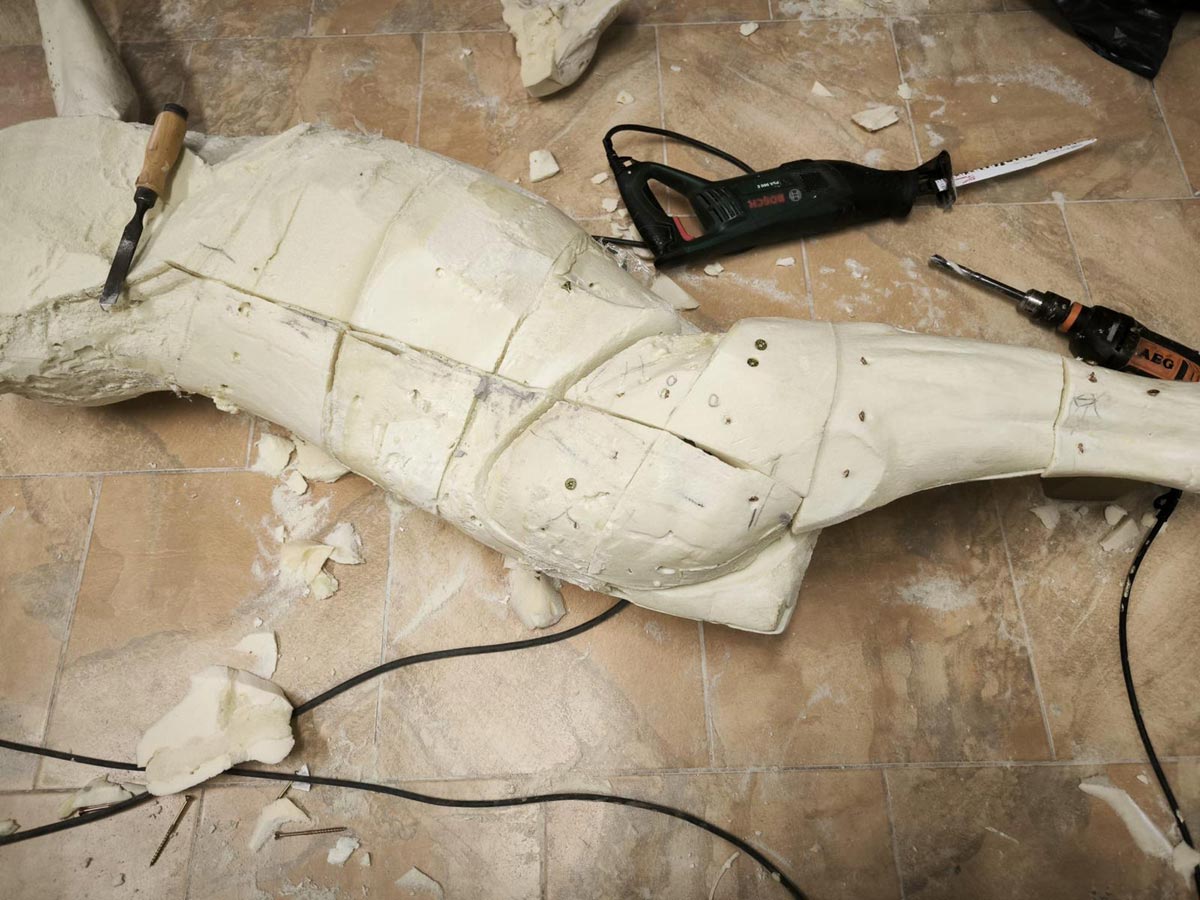
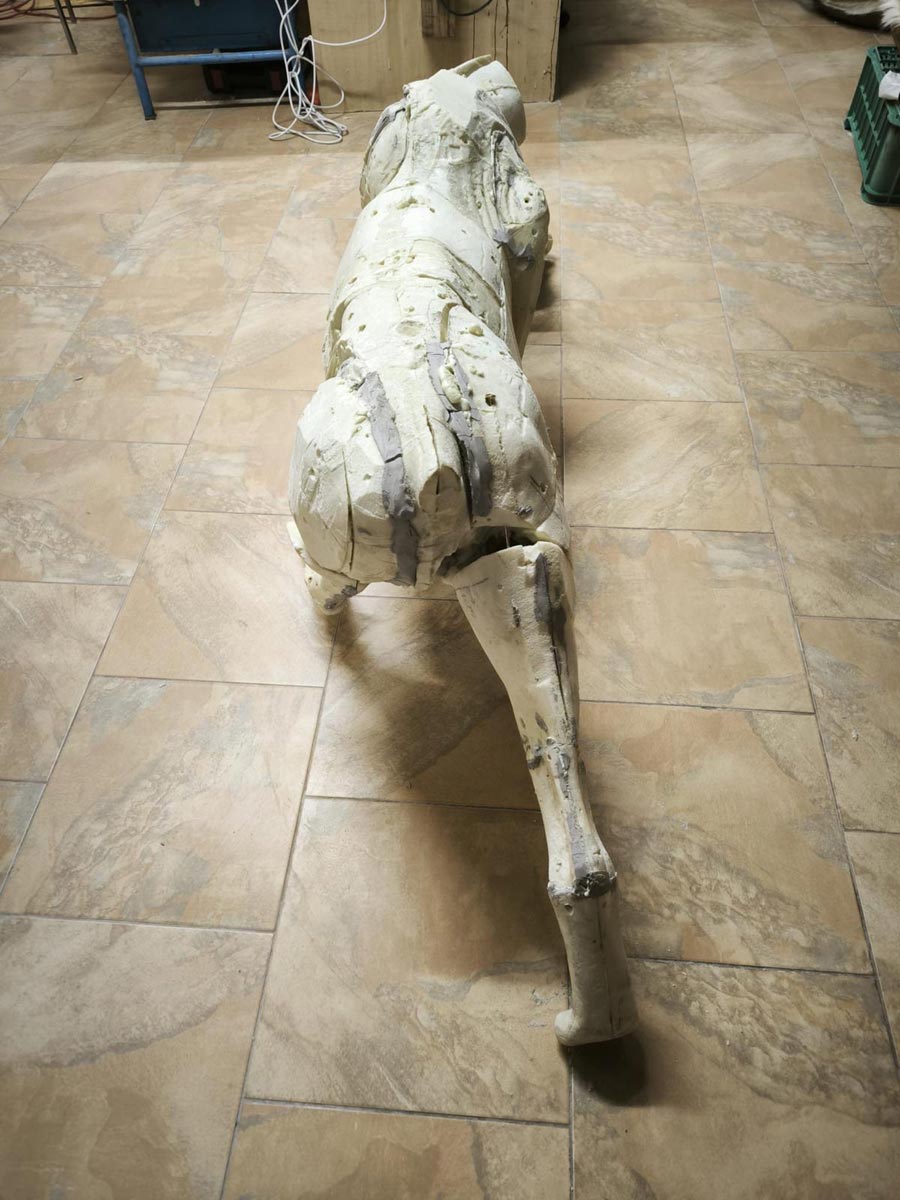
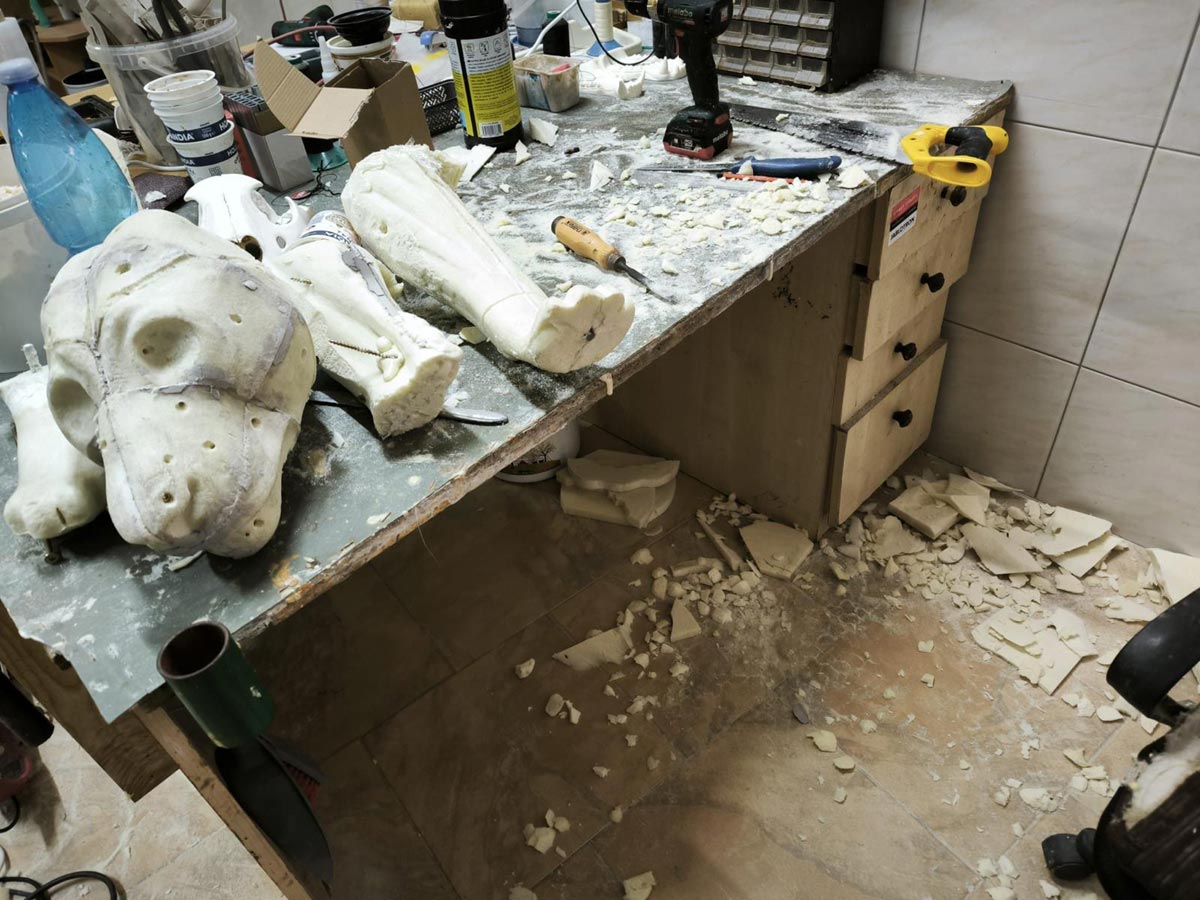
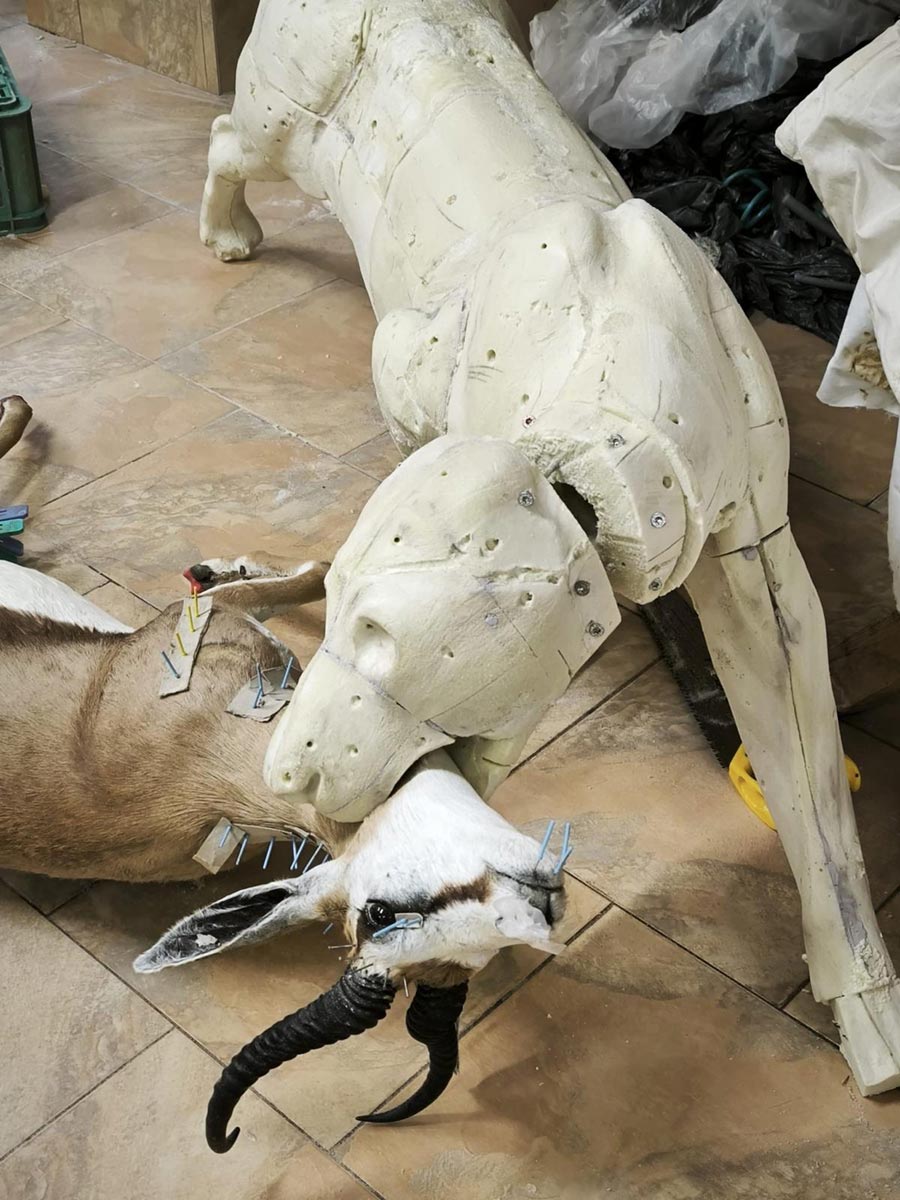
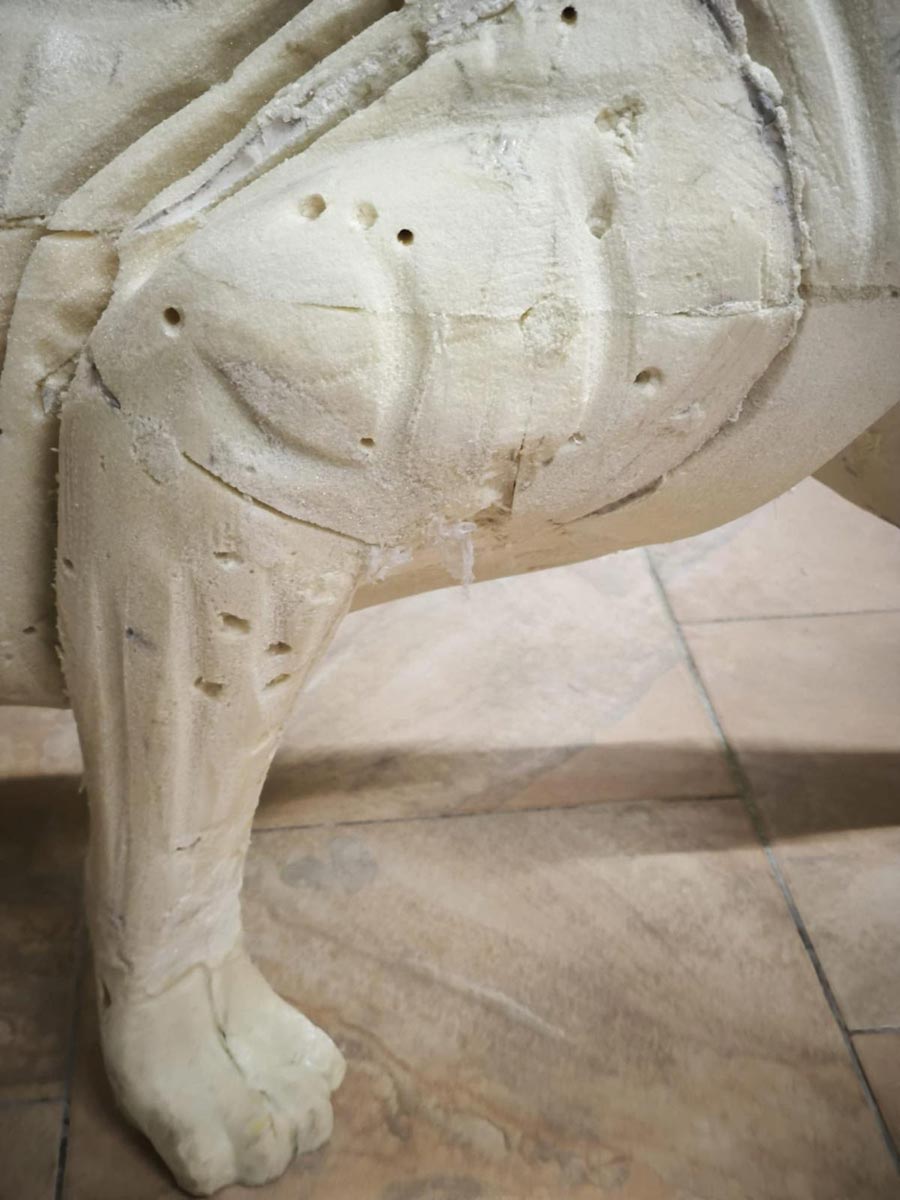
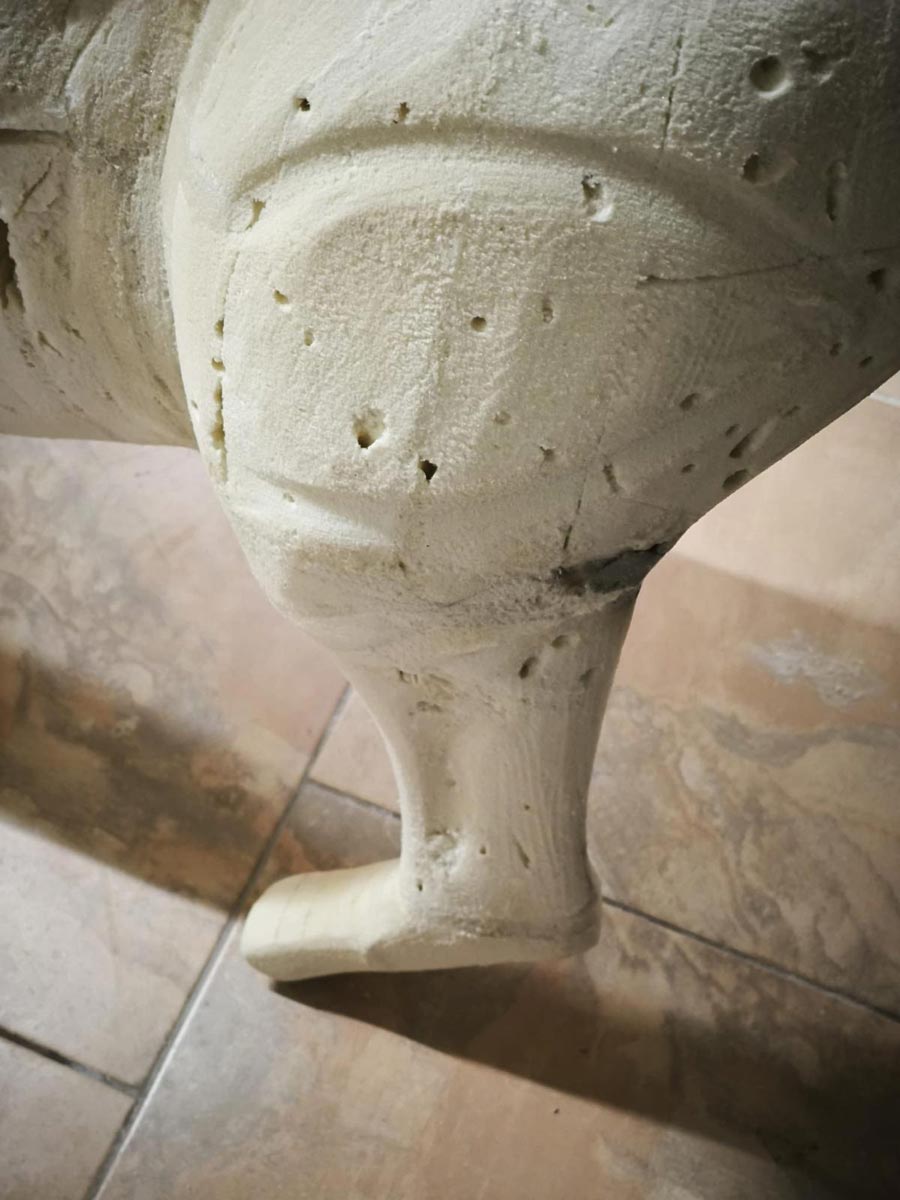
The form is then cut, shortened, extended and reassembled. We adjust the curve of the spine, the position of the shoulders, the height and angle of the legs, and the direction of the head. Sometimes the form must be divided into its individual anatomical sections and rebuilt in an entirely different pose.
In the photographs, this stage may look rather drastic. Pieces of foam, separate limbs and a detached head surround the workbench. Yet this is the stage that determines whether the finished movement will appear natural and convincing.
Two animals, one moment
In a composition like this, it is not enough for the lioness and her prey to work as separate mounts. They must connect both anatomically and visually.
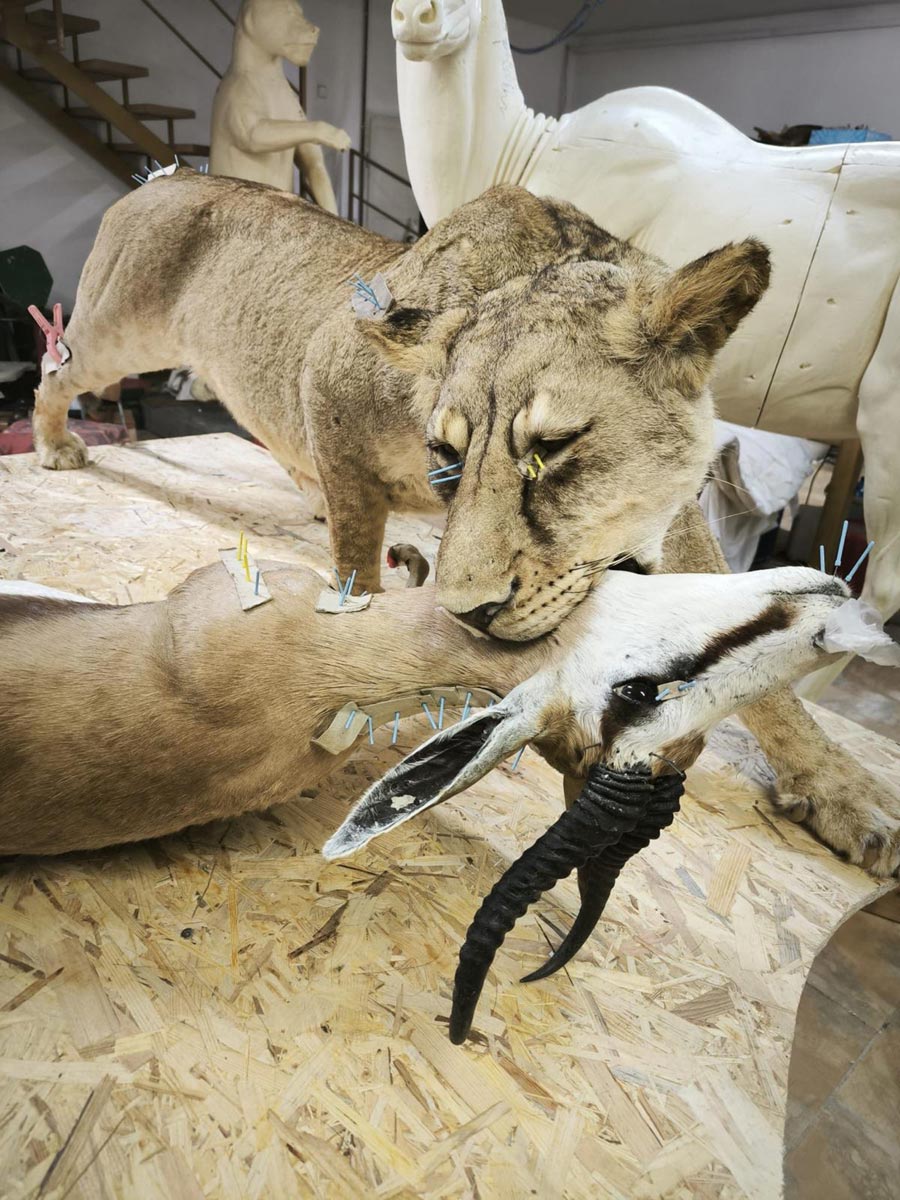
Every point of contact matters: the position of the lioness’s mouth on the antelope’s neck, the direction of the prey’s head, the tension in the lioness’s body and the placement of her paws. If any of these elements is incorrect, the entire scene can appear stiff or unnatural.
For this reason, we repeatedly position the two forms together and inspect the composition from different angles. We adjust the distances, balance and overall direction of movement. At the same time, we must consider the future base and the angle from which the completed installation will most often be viewed.
From rough cuts to fine details
Once the basic pose is established, we rebuild and refine the muscles, joints and transitions between the modified sections. The rough alterations gradually disappear and the form begins to regain its precise anatomy.
Only then do we test-fit the hide, make further corrections and begin the mounting process itself. The expression of the eyes, position of the ears, shape of the muzzle, tension of the skin and direction of the hair all require careful attention. These seemingly small details ultimately determine whether the finished animal feels alive.
The result should not look like two separate mounts placed beside one another. It should become a single convincing scene – a brief moment from the African wilderness, captured in time.
That is the essence of custom taxidermy. Even when we return to an existing concept, every new composition must be created from the beginning and becomes an original in its own right.